


There is a secret geography of Italy that doesn't appear in ordinary tourist guides. It is traced between rows of Nebbiolo on calcareous marl, cellars buried in the tuff of Montalcino, tables set in the stone courtyards of Chianti, and glasses that capture the afternoon light like Gothic stained-glass windows. It is the wine route - and it doesn't have a fixed path, because every producer, every vintage, and every type of soil tells a story that never repeats itself in the same way.
From north to south, the Peninsula offers the wine world an unparalleled complexity. The credit goes not only to the climate or latitude: it belongs to a millennia-old viticultural culture that has selected extraordinary native grape varieties - the Piedmontese Nebbiolo, the Venetian Corvina, the Tuscan Sangiovese - and has rooted them in territories so specific as to make each denomination a universe unto itself. In this article, we journey through the six denominations that, more than any others, define the great narrative of Italian wine. Not an itinerary to follow day by day, but a cultural map to keep in your pocket when you arrive in Italy with a good glass in mind.
From north to south, from the King of Wines to the Wine of Kings.
Barolo DOCG
Piedmont - Langhe, Cuneo - "The King of Wines, the Wine of Kings"
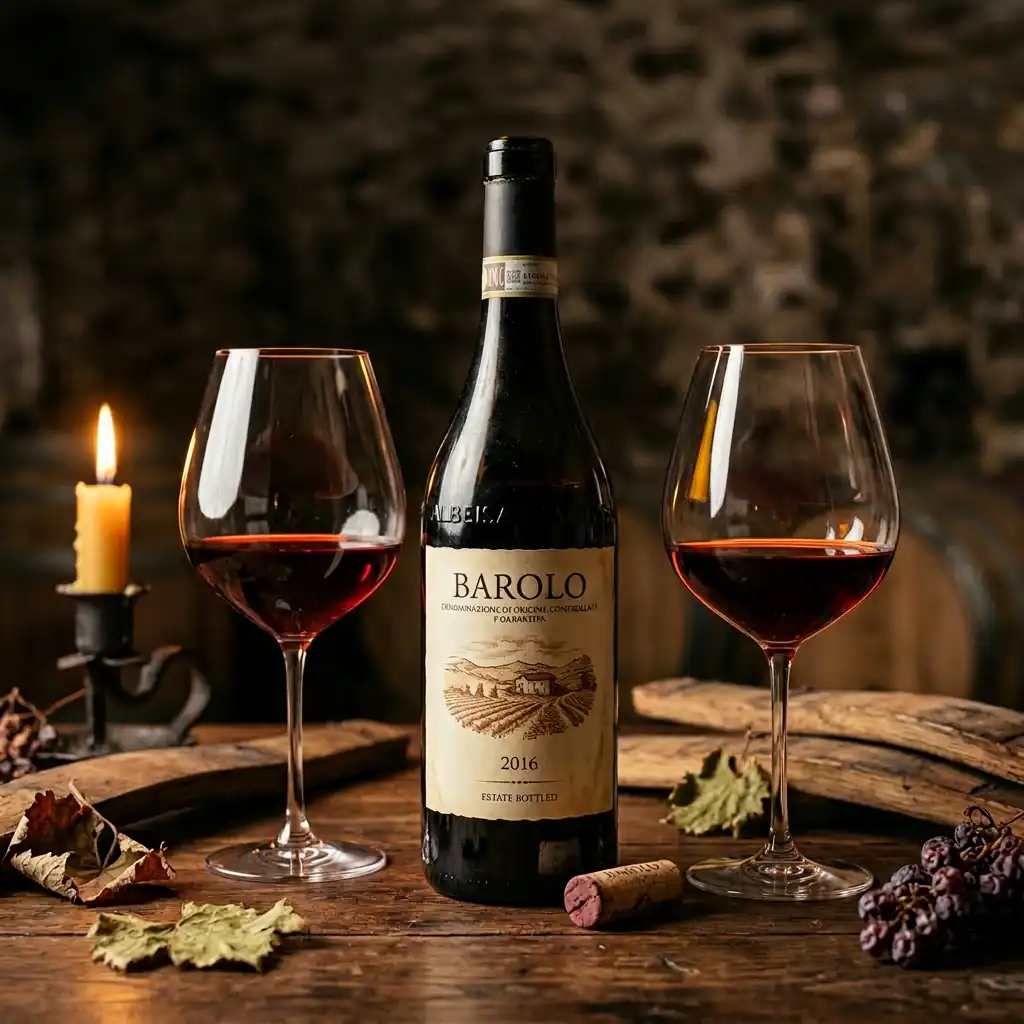 Barolo DOCG - Piedmont
Barolo is the point of no return for those who love Italian red wine. Produced exclusively from Nebbiolo grapes in the eleven municipalities of the Langhe - La Morra, Castiglione Falletto, Serralunga d'Alba, Barolo, Novello, Monforte d'Alba among others - it is born on calcareous marl soils whose geochemical differences between Serravallian and Helvetian translate into opposite and complementary characters: more elegant and floral the first, more austere and tannic the second. It is precisely in this dialogue between geologies that the infinite variety of Barolo lies.
On the nose, a mature Barolo is an olfactory catalog of rare complexity: faded rose, tar, rhubarb, dried violets, candied orange peel and - in long aging - the infamous goudron, that note of sweet tar that identifies Nebbiolo among a thousand other grape varieties. On the palate, the tannic structure is the signature: tannins that become silky over the years without ever losing their backbone, supported by a vibrant acidity that guarantees longevity of 20, 30, sometimes 40 years in great vintages. Barolo is not drunk young: it is awaited, anticipated, commemorated.
Barbaresco DOCG
Piedmont - Langhe, Cuneo - "The Queen of Wines"
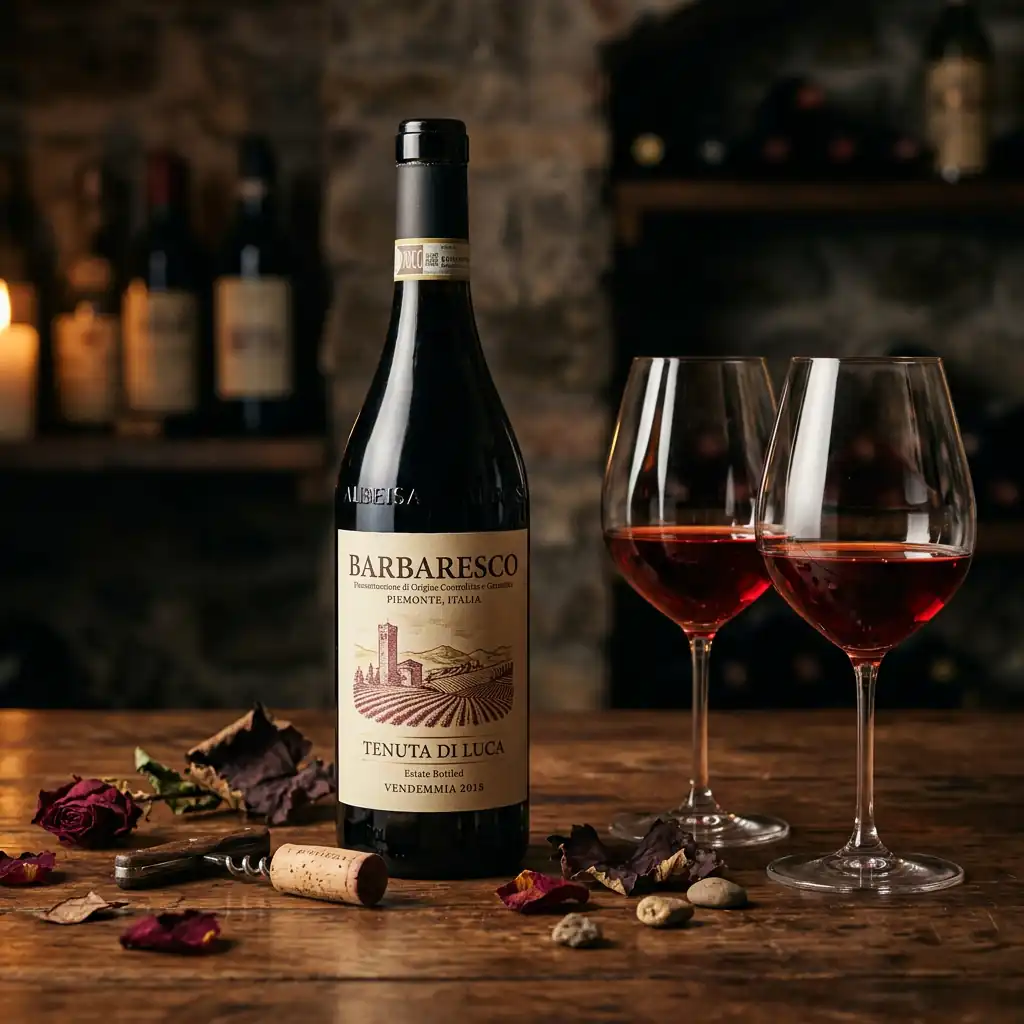 Barbaresco DOCG - Piedmont
If Barolo is the King, Barbaresco is the Queen: same Nebbiolo grape, same Piedmontese territory, deeply different character. The soils of Barbaresco - sandier, at slightly lower altitudes around the municipalities of Barbaresco, Neive, and Treiso - give the wine an early aromatic finesse and more accessible tannins, without taking anything away from the underlying depth. It is often the first Nebbiolo to conquer international palates: it seduces before Barolo has finished thinking about it.
The historic crus - Asili, Rabajà, Sorì Tildin, Sorì San Lorenzo - are names that make the hearts of enthusiasts worldwide beat faster. Angelo Gaja has made them globally famous since the 1970s, but dozens of small artisanal producers guard these vineyards with silent dedication, producing bottles of the highest level that still remain under the radar of the mass market. Here lies the opportunity for the curious traveler: to arrive before the others, to return when no one yet knows the name of the cru.
Franciacorta DOCG
Lombardy - Lake Iseo, Brescia - "Italy's Finest Sparkling Wine"
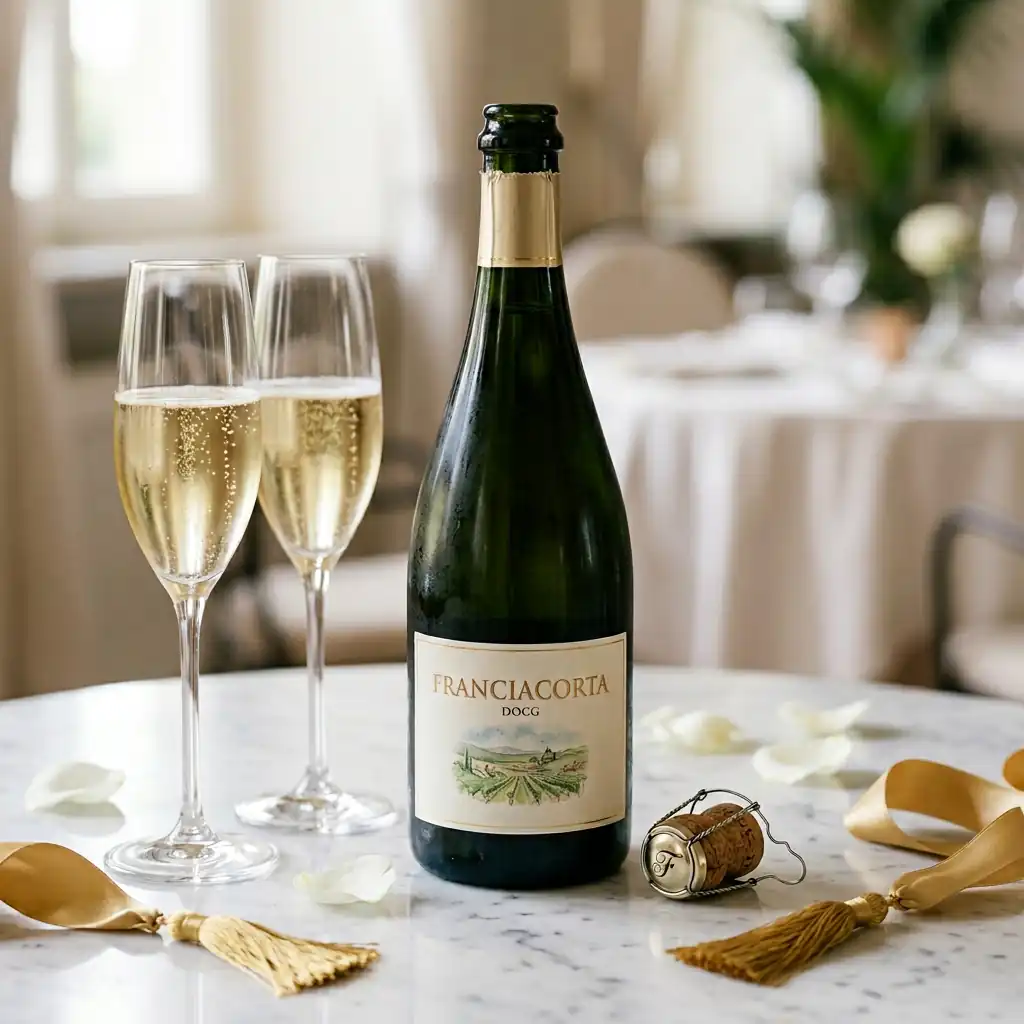 Franciacorta DOCG - Lombardy
Franciacorta is the Italian answer to Champagne - but anyone who reduces it to a simple comparison hasn't yet understood what it's really about. Produced with the traditional method from Chardonnay, Pinot Noir, and Pinot Blanc grapes on morainic soils deposited by the last Würm glaciation, it develops a calcareous minerality unparalleled in Italian sparkling wine. The DOCG, recognized in 1995, is among the strictest in Europe: the minimum aging times on the lees - 18 months for non-vintage, 30 for vintage, 60 for Riserva - exceed those of Champagne AOC.
A Franciacorta Satèn aged 24 months on the lees tells of freshly baked white bread, candied citrus, acacia flowers, and a persistent and very fine bubble that caresses the palate instead of aggressively attacking it. Between Lake Iseo and the first Brescian hills, Bellavista and Ca' del Bosco have built museum-like architectures designed for the demanding traveler - not simple cellars, but places where wine becomes a total experience amidst art, architecture, and morainic landscape.
Amarone della Valpolicella DOCG
Veneto - Valpolicella, Verona - "The Bitter Great One"
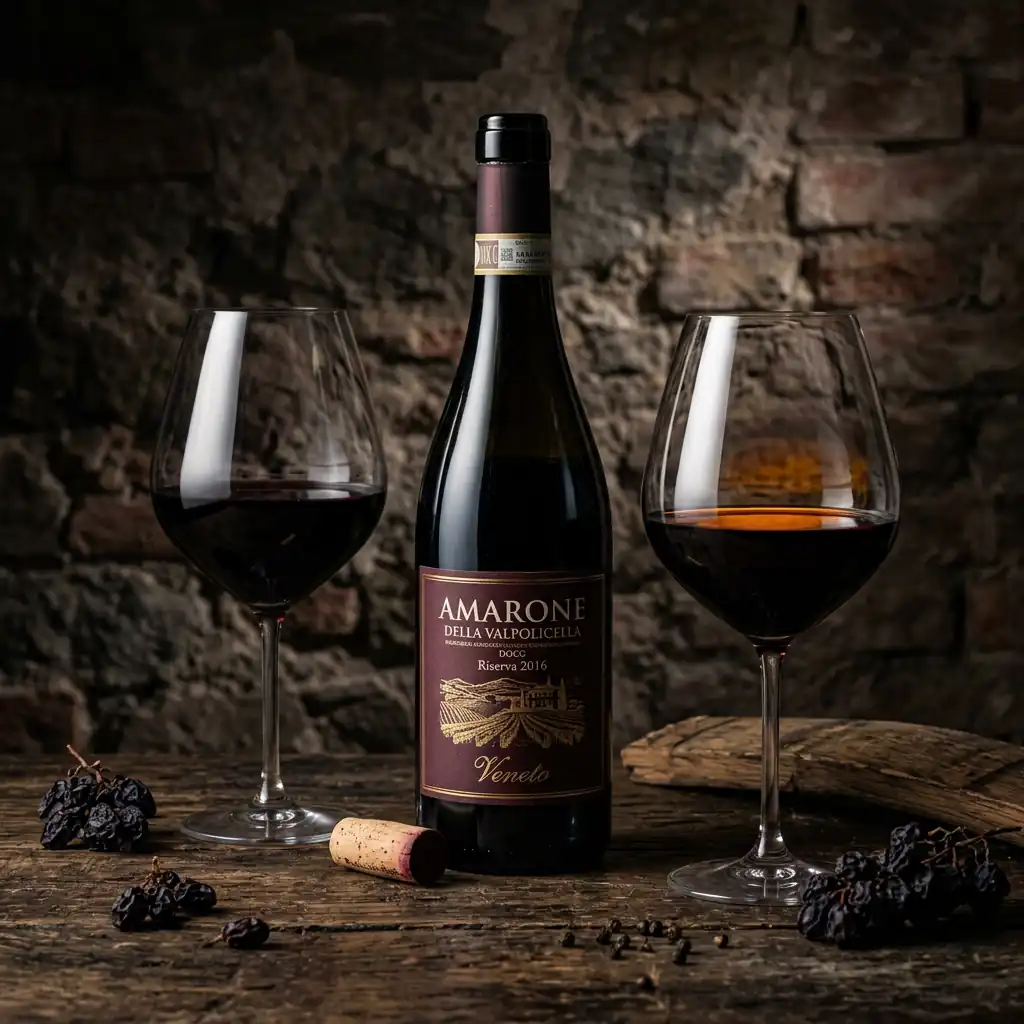 Amarone DOCG - Veneto
Amarone is the result of an ancient and courageous gesture: leaving the grapes - Corvina, Rondinella, Molinara - to dry on bamboo racks called arele for three or four winter months, reducing their weight by 40%, concentrating sugars, tannins, and aromas to the limits of plausibility. The result is a wine that defies categories: 15-17 degrees of alcohol, a monumental body, yet with a noble bitterness that balances the sweetness of the fruit and saves every sip from heaviness. It is that bitterness that gave it its name - and that makes it unmistakable among all the wines of the world.
Black cherry soaked in spirits, bitter cocoa, Kentucky tobacco, leather, and oriental spices make up the profile of a classic Amarone. Great producers offer radically different styles: the rustic and earthy of Quintarelli, the modern and opulent of Dal Forno Romano, the elegant and precise of Bertani Amarone d'Epoca. Three philosophies that look at each other from afar, all legitimized by decades of silent greatness. Amarone does not seek rapid consensus: it waits for those who are ready to understand it.
Chianti Classico DOCG
Tuscany - Florence-Siena, Black Rooster - "The Heart of Tuscany"
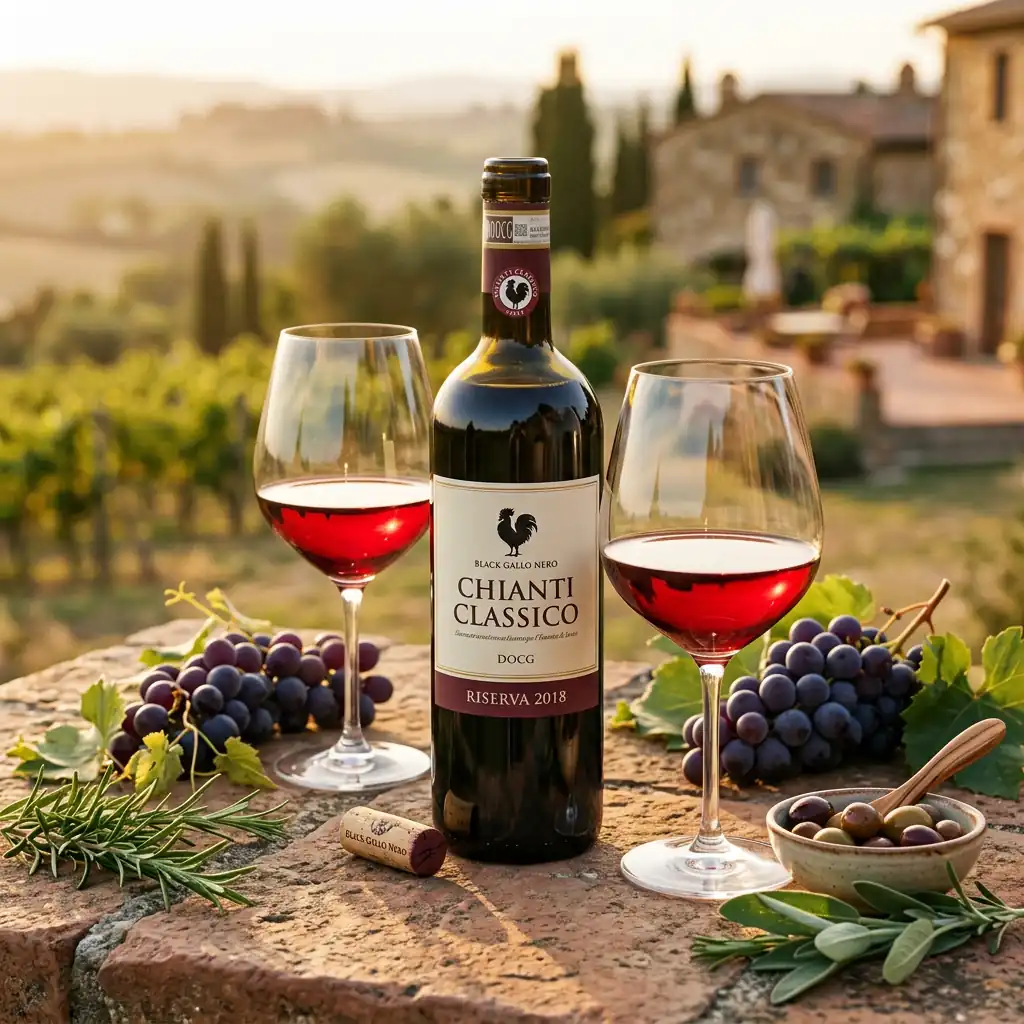 Chianti Classico DOCG - Tuscany
Chianti Classico is not Chianti. This distinction is not academic: it is geographical, historical, qualitative. The area of the Black Rooster (Gallo Nero) - squeezed between Florence and Siena, on the hills of galestro and alberese soil between Greve, Panzano, Radda, Gaiole, and Castelnuovo Berardenga - produces from Sangiovese wines of an aromatic precision found nowhere else. The profile is unmistakable: lively cherry, violet flowers, Mediterranean scrub aromatic herbs, iron, flint. A wine that tastes of the Tuscan landscape, not just of grapes.
The quality pyramid - Chianti Classico, Riserva, Gran Selezione - expresses the same grape variety in increasing nuances of depth and longevity. Historic producers like Fontodi, Isole e Olena, Montevertine, and Castello di Ama are today joined by a new generation experimenting with single vineyards and plot vinifications, elevating the Classico to a global conversation on the identity of Sangiovese. The galestro - friable, schistose, draining soil - is the invisible signature of every great bottle of the Black Rooster.
Brunello di Montalcino DOCG
Tuscany - Montalcino, Siena - "The Wine of Kings - Italy's Greatest Red"
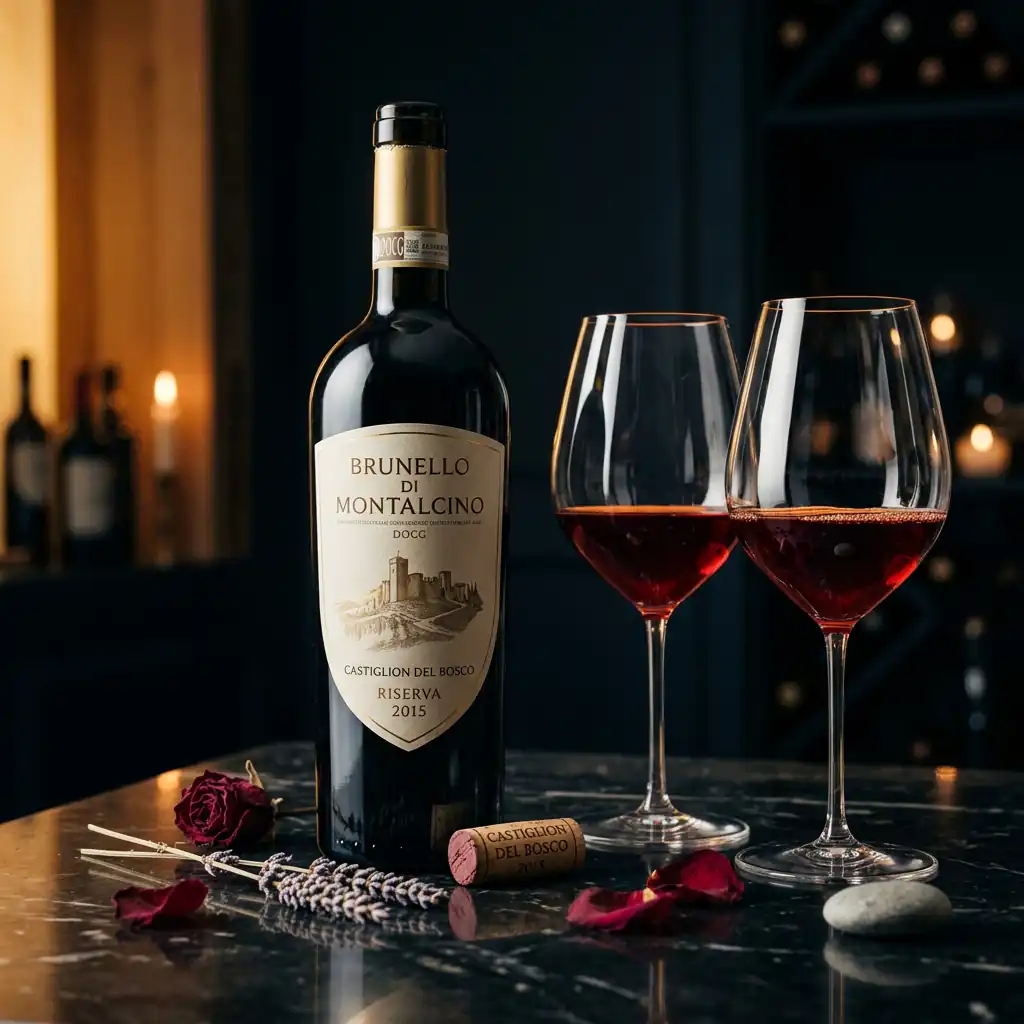 Brunello di Montalcino DOCG - Tuscany
Brunello di Montalcino is born from a local clone of Sangiovese - the Brunello, renamed Sangiovese Grosso - on an isolated hill in the heart of southern Tuscany, at 564 meters of altitude, where the microclimate works a miracle: warm enough to fully ripen the grapes, windy enough to preserve the acidity that guarantees decades of evolution. The hill of Montalcino is a world unto itself: the differences between the north slope - cooler, more acidic, longer-lived - and the south slope - warmer, softer, ready sooner - are so marked that the most aware producers declare them on the label as an act of transparency towards the evolved consumer.
A Brunello di Montalcino Riserva requires five years of aging before being released on the market: at least two in large Slavonian oak casks, further months in the bottle, then other years in a private cellar to fully express itself. The result is a temporal concentration that few other wines in the world can equal. The profile is of monumental depth: pomegranate and wild cherry, cinchona, licorice root, leather, pipe tobacco, damp earth after an August rain, dried rose. A wine that does not describe the present: it tells the past of those who made it and anticipates the future of those who will drink it.
🍽 The Four Classic PairingsExperience the Wine Route in Private
Every wine described in this article is a real experience that Argiletum Tours custom-designs - with specialized enologist guides, access to cellars not open to the public, and fully managed logistics. From your arrival in Italy to the last sip of Brunello, you don't have to think about a thing.
Request Your Private Itinerary