
The presentation of the 2026 Michelin Guide Italy, held on November 19 at the Parma Regio Theatre, brought three important recognitions to Rome: Ineo at the Anantara Palazzo Naiadi (chef Heros De Agostinis), La Terrazza at Hotel Eden (Executive Chef Salvatore Bianco) and Al Madrigale in Tivoli, with its “new rural cuisine”. With these additions, Rome consolidates its position as Italy’s most starred city with 31 total stars distributed across Lazio, with 20 concentrated in the Capital alone.
But stopping at the stars would be reductive. Because Rome in 2025 is a gastronomic laboratory where diverse souls coexist, all equally fascinating.
When Tradition Meets Design
If there’s one phenomenon that has redefined Rome’s food landscape in recent years, it’s the explosion of modern trattorias. The paradigm was created by Santo Palato by Sarah Cicolini in the San Giovanni area: opened in 2017, this locale proved that you can remain faithful to Romanness without falling into stereotype.
Here you find trippa alla romana, amatriciana, carbonara and the entire repertoire of Roman cuisine, but with a decidedly contemporary spirit. The space, recently redesigned by the Naessi studio, transformed the codes of the historic trattoria (wooden walls, white tablecloths, display case counter) into a design operation looking to the future. The result? A venue that inspired a new generation of restaurateurs and now boasts Three Forks in the Gambero Rosso Guide.
Santo Palato’s philosophy is clear: a trattoria can (and must) be contemporary too. This means respect for raw materials (often sourced from quinto quarto), refined technique, a carefully curated natural wine list and an informal yet never banal atmosphere. Sarah Cicolini, with her #cicolination, has transformed carbonara into a cultural movement.
She’s not alone. At Tribuna Campitelli, the new hub of Roman dining opened in November 2025, precision cuisine tells Rome’s story with iconic dishes reinterpreted with technique and balance. The calamarata with shrimp alternates cooking methods and temperatures (intense bisque, sautéed and raw shrimp), finishing with lard and herb pesto.

Where Gastronomy Meets Urban Culture
Rome is not just the historic center. In fact, some of the most interesting projects are emerging in peripheral neighborhoods experiencing genuine gastronomic rebirth.
Testaccio remains the neighborhood-symbol of popular Romanness, and its covered market is an unmissable gastronomic hub. Here you breathe the true soul of the city: stalls overflow with fresh products, but street food makes the difference. Mordi e Vai prepares legendary sandwiches filled with trippa al sugo, beef stew and lesso alla picchiapò, while CasaManco bakes organic flour pizzas al taglio.
Ostiense is establishing itself as a trendy zone: here Brucio opened, a project centered on fire and grilling, with selected cuts and ancestral cooking methods. A convivial venue perfect for those who love the grill.
Centocelle, a working-class neighborhood in East Rome, sees the opening of Breaking Bread Bistrot, while Prati welcomes El Santo and the San Saba area enriches itself with Tucca, uniting pizza and contemporary cuisine by chef Simone Maddaleni.
Even Fiumicino is no longer just airport: after Roman success, 180 Grammi by Jacopo Mercuro brings to the coast its contemporary Roman pizza – round, thin, crispy.
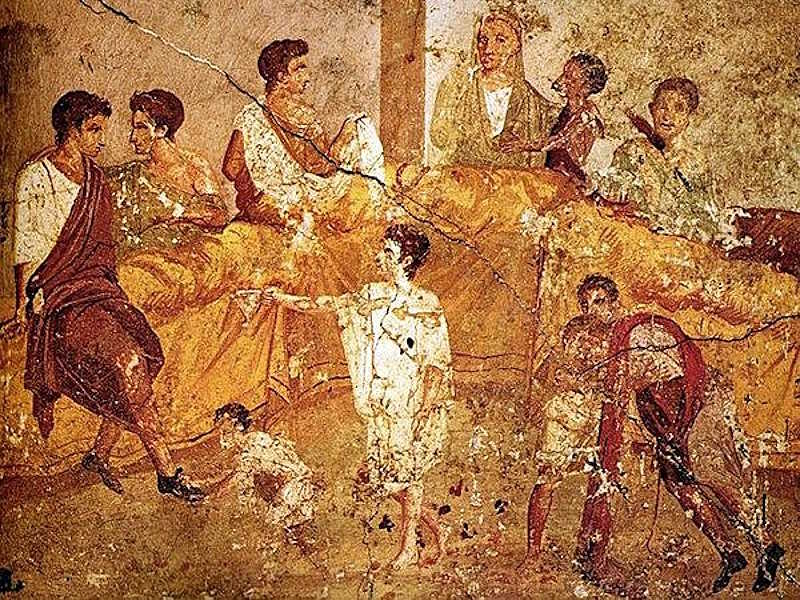
The Essence of the City in One Bite
Speaking of Rome without mentioning its street food is impossible. Here street food is not a recent trend, but a centuries-old tradition.
The supplì is the absolute icon. This bomb of rice, tomato sauce, offal and melting mozzarella “al telefono” represents the popular soul of Rome. The best? Supplizio by Arcangelo Dandini (with variations like carbonara and amatriciana), Trapizzino with classic supplì and tortellini version, and La Casa del Supplì in Trastevere, a forty-year-old institution.
Trapizzino itself deserves its own chapter: invented by Stefano Callegari, it’s a triangle of white pizza by the slice filled with Roman cuisine classics (chicken cacciatore, meatball in sauce, tongue in green sauce). Street food that conquered Italy and the world, with locations from Ponte Milvio to Piazza Trilussa.
The Jewish Ghetto represents a unique chapter in Roman gastronomy. Here Judeo-Roman cuisine intertwines with the rules of Kashrut (Jewish dietary laws) creating a distinctive culinary tradition.
The signature dishes? Carciofo alla giudia, flower with crispy leaves and tender heart, fiori di zucca ripieni, aliciotti con l’indivia, concia di zucchine. Among historic restaurants stand out Nonna Betta (Rome’s first kosher-style restaurant), Ba’Ghetto (the largest kosher dining reality in Europe, with locations in Florence, Milan and Venice), and Renato al Ghetto.
Kosher cuisine is not just religious, it’s pre-modern organic: rigorous ingredient selection and traditional preparation methods guarantee highest quality.

The Pulsing Heart of Roman Gastronomy
Neighborhood markets are Rome’s soul. Places where the city tells itself through products, voices, colors and aromas.
Campo de’ Fiori is the most iconic: already in 1869 it was the center of “vignarole” commerce, peasant women bringing fresh herbs and vegetables from the countryside. Today the market, in its historic piazza, offers fruit, vegetables, spices, flowers, cheeses, cured meats and specialty products.
The Testaccio Market, as mentioned, is the gastronomic hub par excellence, with traditional stalls alternating with innovative proposals, street food and vegan food. Here they organize cook-outs, tastings, workshops and even archaeological visits in the underground horreum.
The Trionfale Market, near the Vatican, is one of Rome’s largest covered markets with over 270 stalls. An impressive variety of fresh products: cheeses, meats, fish, vegetables.
Trastevere has its historic market in Piazza San Cosimato, dating back to the early 1900s: local products like puntarelle, broccoli romaneschi, artichokes, fava beans stand out.
The Esquilino Market is the most multicultural: Chinese pasta, soy sauce, Romanian cured meats, vegetables with unpronounceable names, spices from every corner of the world. Contemporary Rome in one market.

The Future is Already Here
The Roman gastronomic scene lives thanks to young talents emerging on the scene. Matteo Faenza of the Mogano restaurant in Formello won the prestigious 2025 Emerging Chef Award, a competition reserved for under-30s. His winning menu, titled “Sabyr,” told Mediterranean cultural contaminations with dishes like braised Central Apennine White Veal IGP in beer, accompanied by pickled shallots and innovative ponzu sauce prepared with local soy from peas.
Also Valerio Cesaroni from the starred restaurant Sintesi in Ariccia distinguished himself in the 2025 Emerging Server Award, confirming that Lazio is a nursery of talent.
The Emerging Award is a fundamental showcase: since 2006 it has “launched” over 100 new Michelin stars. The Center-South selection takes place annually in Rome at the ELIS Training Center.

Wine as Culture
Rome is experiencing a genuine golden age of enotecas. No longer simple retailers, but hybrid places where wine dialogues with contemporary cuisine and convivial atmosphere.
Trimani is the historic institution: since 1876 it represents a symbolic place for enthusiasts. In 1991 the opening of ilwinebar pioneered a concept that then spread like wildfire. Extensive wine list, subdivided beyond regional filters, refined pouring, accessible prices, meetings with producers.
L’Antidoto in Trastevere is a small natural wine shop with accompanying cuisine curated by Mirko Pelosi. At its center natural wines and a tapas menu that changes frequently, with many vegetable options.
Cavour 313, historic shop behind Monti dating to 1935, was reborn at the end of 2024 with new look and dual offering: fast counter cuisine and gourmet restaurant in the second room. Concise wine list but focused on natural, organic, biodynamic wines.
Rimessa Roscioli and Salumeria Roscioli are temples of Roman enogastronomy, where wine selection (from small artisanal productions to French bubbles) accompanies cured meats, cheeses and seasonal dishes.
Absolute novelty: Marco Martini opened beneath his starred restaurant a wine bar that quickly became a reference for oenophiles. List exclusively of natural wines, with selection of small French houses, and tasty cuisine (sausage and sauerkraut, cheese and cured meat boards).
Rome from Above

Experiencing Rome from above is a unique experience, and the city offers an impressive selection of rooftop bars and panoramic terraces where gastronomy and breathtaking views merge.
La Terrazza Les Etoiles, at the Atlante Star Hotel, offers a 360° panoramic view of Rome’s rooftops with St. Peter’s Dome practically within reach. It develops on three levels between restaurant, rooftop bar and roof garden.
The Terrace of Bulgari Hotel Roma dominates the entire historic center, from Villa Medici to Trinità dei Monti, from the Tiber to the Gianicolo. The atmosphere changes throughout the day: daytime relaxation, glamorous aperitif at sunset, cocktails under the stars in the evening.
The Roof at Edition Rome is an elegant urban oasis with views reaching the Altar of the Fatherland, signature cocktails and sophisticated atmosphere.
Alto, on the sixth and seventh floors of the boutique hotel The First Musica, combines restaurant and cocktail bar with unusual view of the Tiber. On the seventh floor a terrace dominated by a centuries-old olive tree.
Imàgo at Hotel Hassler (Michelin-starred restaurant) offers not only signature cuisine but also one of Rome’s most spectacular views.
Terrazza Mirador at the Gianicolo, Ripa Grande in Trastevere and Terrazza Mantis by Martin Miller’s on the Aventine (in collaboration with chef Marco Martini) are places of Roman summer where to spend evenings between refined cocktails and gourmet food.
New Openings 2025
The Roman gastronomic scene is in continuous movement. Every month brings new openings ranging from street food to signature cuisine.
In 2025 DAO Chinese Restaurant opened in via Sardegna (Via Veneto-Ludovisi neighborhood), Patty Smash ‘n’ Fries dedicated to smash burgers, La Verve with signature cuisine and refined setting, Da Aurelio bringing back the most authentic trattoria tradition, Matrem in via del Corso, Merulì in via Buonarroti combining Roman pizza and Calabrese ingredients.
Testifying to the city’s vitality, even YouTuber Cicciogamer89 opened his first restaurant in the Trieste neighborhood.
The numbers speak clearly. With 16 one-star Michelin restaurants within the Greater Ring Road, 4 two-star restaurants and La Pergola sole three-star of Lazio (led by legendary Heinz Beck since 2005), Rome confirms itself as Italy’s most starred city.
But stars are only the tip of the iceberg. Rome is:
Capital of contemporary trattorias, where tradition and innovation coexist
Street food leader, with icons like supplì and trapizzino recognized worldwide
Keeper of kosher cuisine, unique cultural heritage
City of neighborhood markets, where each district has its gastronomic soul
Hub of young talents, launching pad for tomorrow’s Michelin stars
Paradise of panoramic terraces, where views compete with the plate
What makes Roman gastronomy unique is its ability to be contemporary without denying its roots. Roman cuisine has ancient and rural origins, is a child of the people, developed between shops and neighborhood markets. It favors humble ingredients and is the result of Roman ingenuity that with little manages to produce much.
But today this same cuisine knows how to dialogue with the world. Roman chefs look beyond borders: Heros De Agostinis of Ineo seeks “flavors beyond our borders” inspired by the multicultural Esquilino neighborhood. Salvatore Bianco of La Terrazza speaks of a Rome “more dynamic, international and stimulating,” where guests desire to “discover authentic flavors and undertake culinary journeys that tell the territory”.
It’s this dialectic between rootedness and openness that makes Rome not just a tourist capital, but a gastronomic laboratory where past and future meet every day, in every dish, in every market, in every trattoria.

Practical Information for the Gastronomic Traveler
When to visit: Rome is wonderful year-round, but spring (April-June) and autumn (September-October) offer ideal climate and seasonal products at their peak. Summer brings panoramic terraces and rooftop bars.
Budget: The offer is stratified. Excellent street food from €3-10, modern trattorias €30-50 per person, starred restaurants from €80 up. Neighborhood markets are perfect for those wanting to save without sacrificing quality.
Reservations: For famous contemporary trattorias (Santo Palato, Sintesi) and obviously for starred restaurants, booking well in advance is essential. Many venues use online reservation systems.
Food neighborhoods: Historic center for density of offerings and starred restaurants, Testaccio for popular soul and market, Trastevere for bohemian atmosphere, Jewish Ghetto for kosher cuisine, Ostiense for trendy new openings, Prati for bourgeois elegance.
Transport: The historic center is best explored on foot. The metro serves well neighborhoods like Testaccio (Piramide station), San Giovanni (line A), Ostiense (line B). Neighborhood markets are generally open Monday to Saturday mornings.
Rome is not just history and monuments. It’s a city that tells itself through food, discovered in its markets, lived in its trattorias, admired from its terraces. A city where every bite is a journey, every dish a story, every chef an interpreter of contemporary Romanness.
Welcome to the Capital of Italian Taste.

Experiences and Travels in Italy

