It was a sweltering day in July, with the sun beating down on me like a burst of cosmic energy. There, from high up in a cloud, it was I, Jupiter, the king of gods, contemplating Rome, the city I had founded many centuries ago.
That moment of divine impulse, of which I still boast, gave rise to an unprecedented adventure, and today, here, from my privileged spot on this fluffy cloud, I can contemplate the changes that this city has undergone over the centuries.
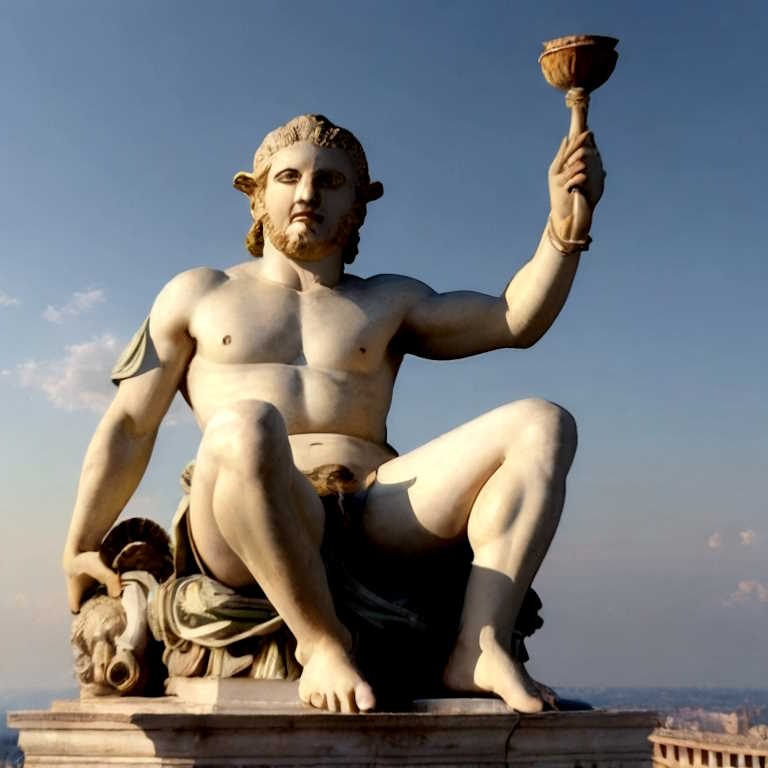
Rome, ungrateful daughter, has given me endless joys and sorrows. I witnessed its foundation, when Romulus and Remus, in a frenzy of fraternal violence, divided this promised land between themselves.
Vesta, the goddess of sacred fire, could only watch in astonishment as Rome burned under the fury of my lightning bolts. Woe to you, Rome, for betraying me so!
When Rome was founded in the 8th century BC, all I could see was a modest settlement on the banks of the Tiber River. This first nucleus, known as Rome Quadrata, was delimited by walls made of tuff, and the view was dominated by simple huts and small wooden structures. However, even at that time, I could sense the energy and ambition of this young city.
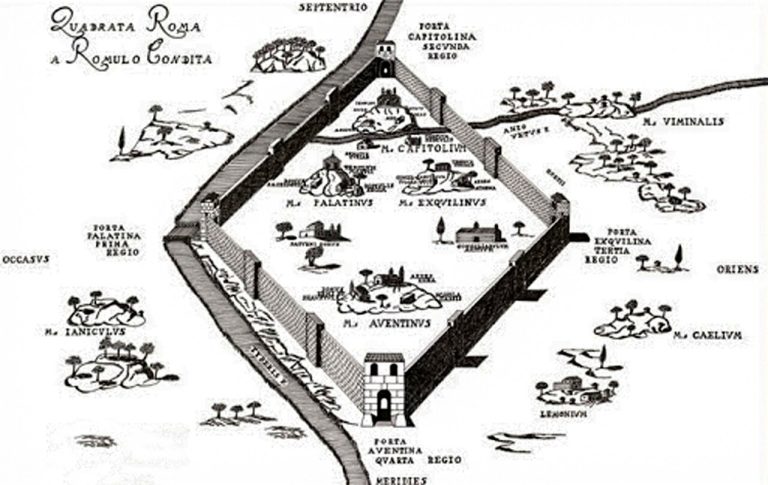
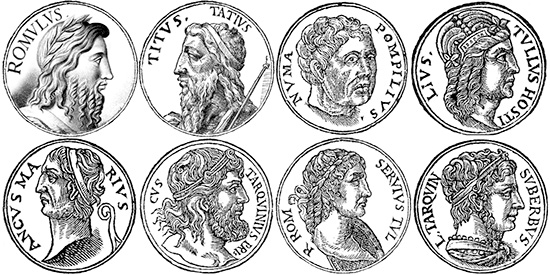
A historical period, from 753 BC to 509 BC, that saw the rule of seven kings before the advent of the Republic.
These seven kings – personally, I counted eight – contributed to the foundation and growth of Rome as a city-state, but in the end, the monarchy was overthrown and replaced by a republican system of government.
According to tradition, Romulus is associated with the founding of the city, Numa Pompilius is remembered for introducing religious worship and establishing the Roman calendar, Tullus Hostilius was a warrior king who carried out numerous military campaigns, while Ancus Marcius was responsible for the construction of important public works such as the Sublician Bridge. Tarquinius Priscus was an enlightened ruler who promoted art and culture, while Servius Tullius introduced significant political reforms. Finally, Tarquinius Superbus was the last king of Rome before the birth of the Republic and was deposed due to his tyranny.
In 509 BC, the city freed itself from Etruscan domination and became a republic governed by two consuls. During this period, it conquered much of central and southern Italy and clashed with major powers like Carthage.
In the republican period, Rome became one of the major powers in the Mediterranean. However, the Roman political system was characterized by internal power struggles and political instability. In 44 BC, Julius Caesar, one of the most important Roman conquerors, was assassinated by the Roman Senate.
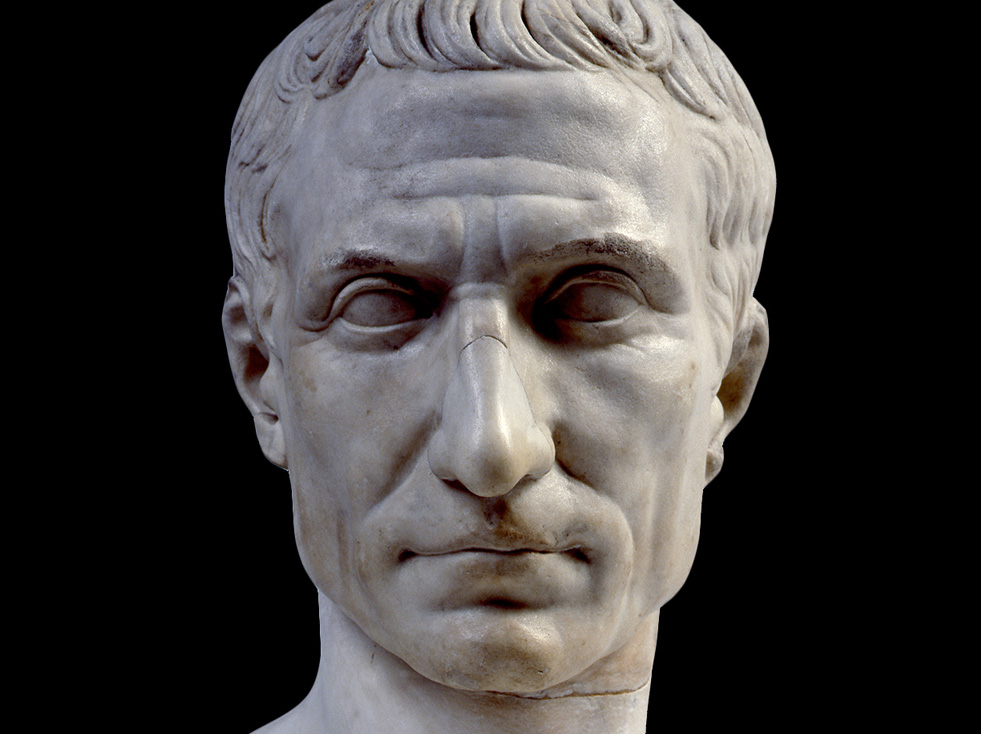
I was there, watching as they built roads and bridges, and when they finally managed to construct the Colosseum and the Pantheon, I felt proud.
Proud also of the Imperial Fora, a series of monumental squares that connected the Colosseum to the Capitoline Hill, where important political, commercial, and social activities took place. And of the main roads, such as the Appian Way and the Sacred Way, crowded with citizens and visitors from all over the empire. Rome was a crossroads of cultures, rich in public buildings, baths, theaters, and temples that reflected the grandeur of the Empire.
I nodded with pride as the years passed and Rome became the heart of a great empire. Its name was on everyone’s lips, from Britannia to Egypt.
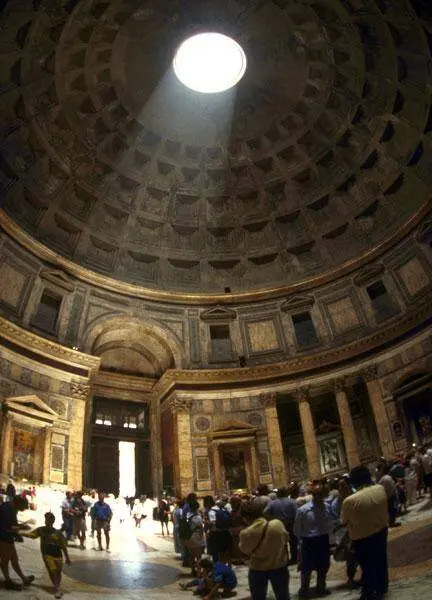
The rise of the Roman Empire brought a period of great prosperity to the city. The streets widened, and aqueducts were developed, providing clean water to over a million inhabitants. I can see the ancient public buildings, such as the Baths of Caracalla and the Basilica of Maxentius, and the vibrant colors of the decorations standing out against the horizon. Imperial Rome, with the magnificence of Roman architecture, its sumptuous buildings and its extravagant splendor, made my godly heart shine.
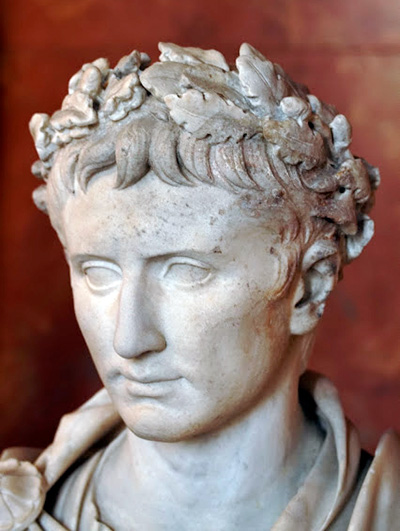
Founded in 27 BC by Augustus, the Roman Empire reached its peak under the reign of Trajan in the 2nd century AD. During his rule, the empire expanded across much of Europe, northern Africa, and western Asia.
The Roman Empire was based on a centralized system of government, with an emperor at the helm. The Roman legions constituted a formidable military force that ensured border security and protected the empire from invasions.
Rome was distinguished by its administrative organization, the spread of Roman law, and the promotion of Greco-Roman culture. The network of Roman roads facilitated trade and communication, contributing to the economic prosperity of the empire.
However, over the centuries, the Roman Empire faced various challenges. Political corruption, power struggles, economic crises, and external pressures undermined its stability. In 476 AD, the last Western Roman Emperor, Romulus Augustus, was deposed by barbarians, marking the end of the Western Roman Empire.
The Eastern Roman Empire, known as the Byzantine Empire, survived until 1453 when Constantinople was conquered by the Ottoman Turks.
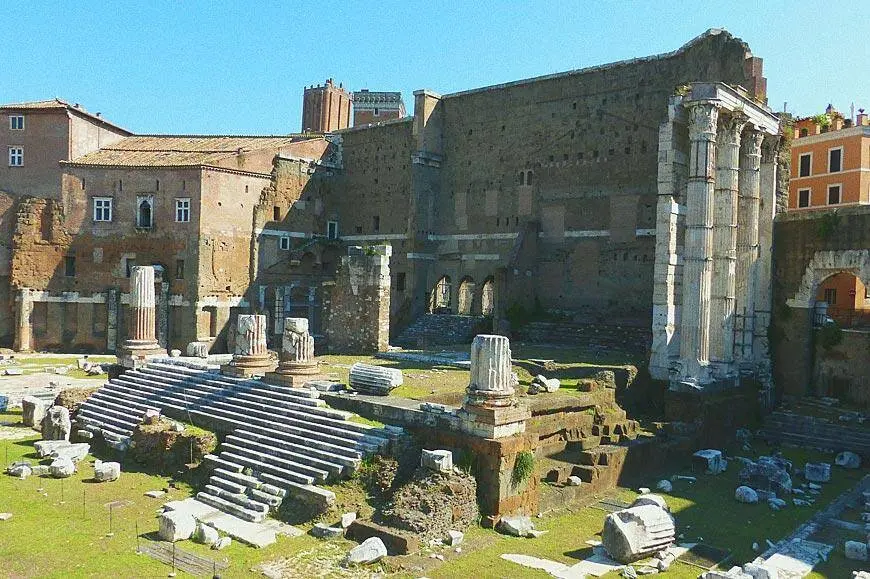
Then came the Middle Ages, that dark period when the city was plundered and humiliated.
But the Middle Ages in Rome were also a period of great historical and cultural importance for the city. It was the seat of popes and the temporal power of the Catholic Church.
During this period, I saw the construction of numerous churches and basilicas, including the Basilica of St. John Lateran and the Basilica of Santa Maria Maggiore. Moreover, many of the ancient structures of the city were restored and expanded.
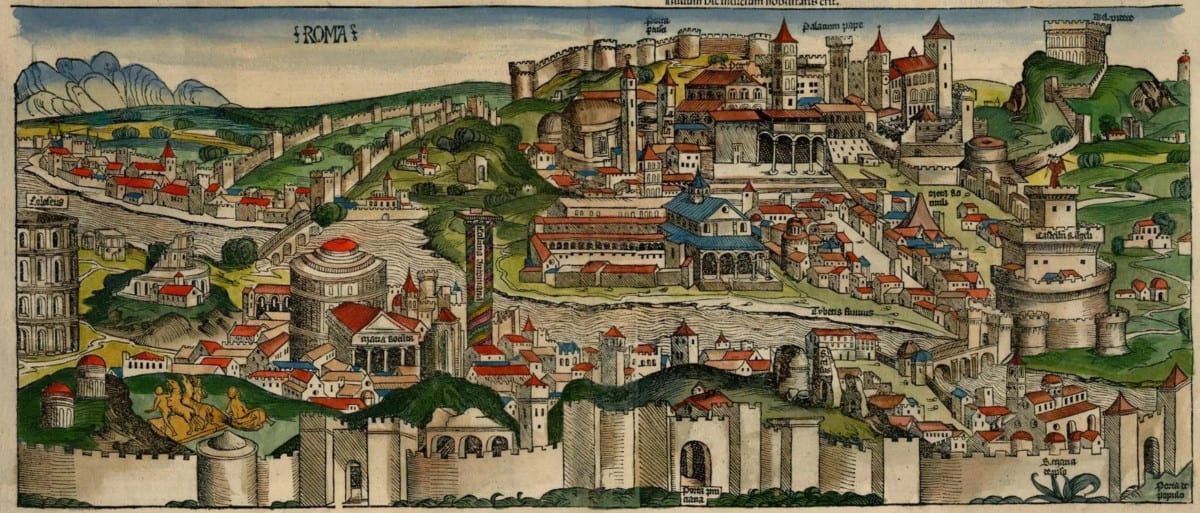
In the second half of the 15th century, Rome was a decaying city, with crumbling palaces and muddy streets… and a hidden treasure beneath its feet: the Domus Aurea of Nero.
This imperial villa had been buried for centuries until it was accidentally discovered in 1480.
The Domus Aurea was a masterpiece of architecture and decoration, with walls covered in frescoes and mosaics. An ancient art treasure that inspired many Renaissance artists, such as Raphael, Michelangelo, Bramante…
To reach it, the artists would lower themselves with a rope through a hole in the ceiling. That was the only way to access it.
In the Domus Aurea, Renaissance artists carefully studied the grotesques, highly popular paintings in ancient Rome depicting scenes of everyday life, animals, and plants.
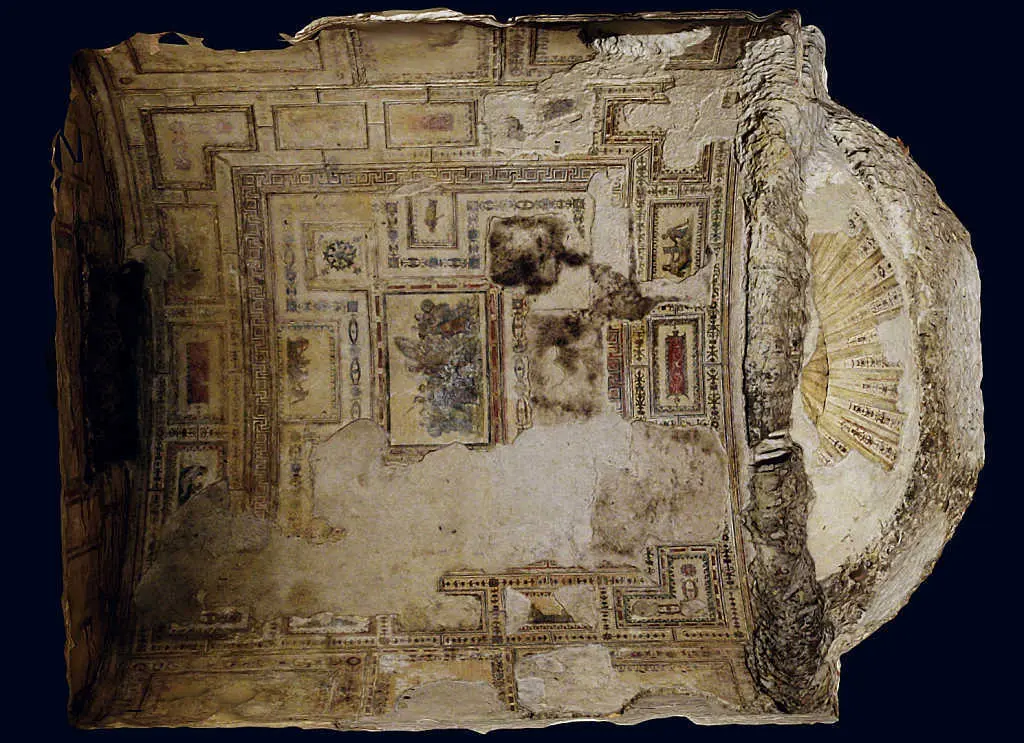
I was watching the young Michelangelo with curiosity as he descended with a rope through the hole in the ceiling of the Domus Aurea, so eager to study ancient art that he was willing to risk his life for it.
“Hello, Michelangelo,” I said, “what brings you to visit the Domus Aurea?”
“I am seeking inspiration for my paintings,” Michelangelo replied, “and there is no better place to find inspiration than here, in the house of Emperor Nero.”
I nodded approvingly. “Yes, that’s true. But you must be careful. This place is dangerous.”
Michelangelo didn’t seem concerned. “I know, but I can’t resist the temptation to see the grotesques. They are so fascinating.”
I smiled. “Yes, the grotesques are truly impressive. But do you know how they were made?”
Michelangelo shook his head.
“The ancient Roman artists used a technique called stucco. They applied a layer of fresh plaster on the walls and then painted on top of it. When the plaster dried, they scraped away some parts to create a three-dimensional effect.”
Michelangelo seemed fascinated. “I knew there was a secret behind these works of art. Thank you, Jupiter.”
He slowly descended from the hole in the ceiling, being careful not to get hurt.
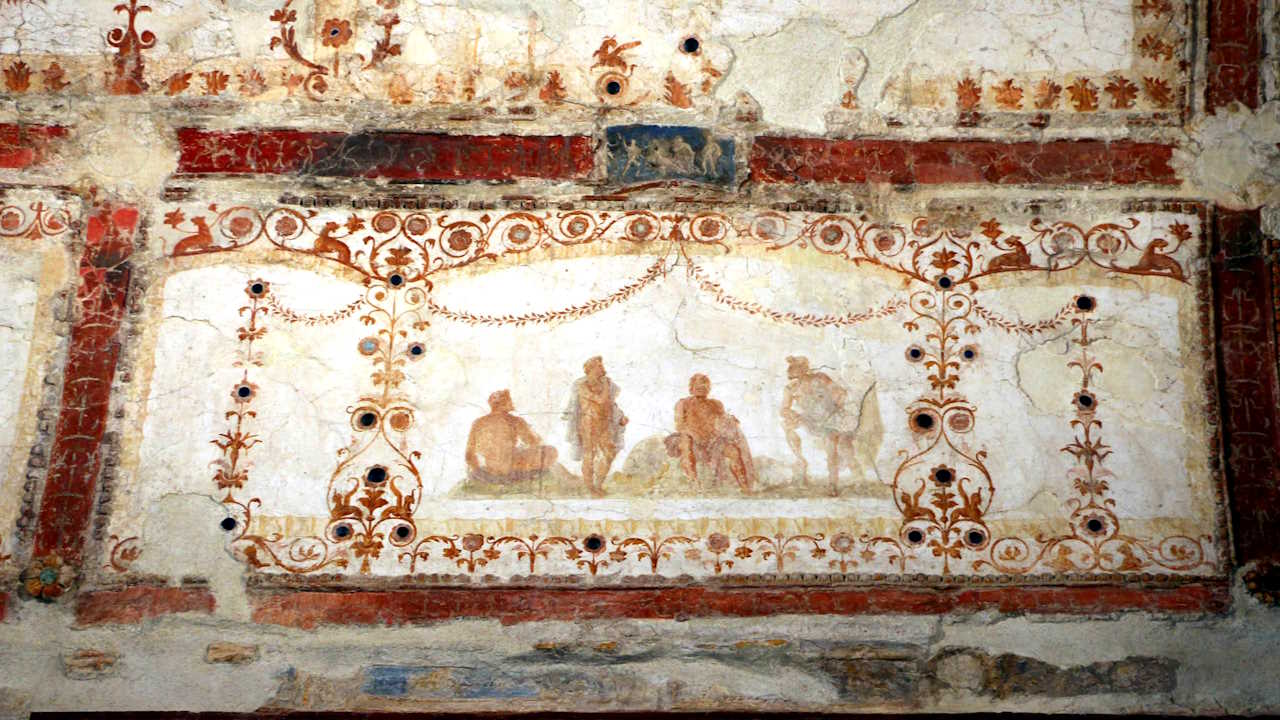
The discovery of the Domus Aurea was an important event for the revival of art in Rome, which became the center of a great artistic and cultural renaissance.
Artists like Michelangelo and Raphael worked on unparalleled works of art, and new palaces and squares were built, revealing the magnificence of this city. St. Peter’s Basilica was reconstructed, becoming one of the greatest works of religious architecture.
I continue my journey through time, and I find myself in Baroque Rome. The architect Borromini is busy designing one of his marvelous churches. I approach and ask, “Borromini, what do you think of this Rome?” Borromini looks up from his drawing and replies, “Oh, Jupiter, this Rome is a triumph of art and beauty. I am happy to contribute to this city that I love so much. But I wonder what it would be like if I could see the future.”
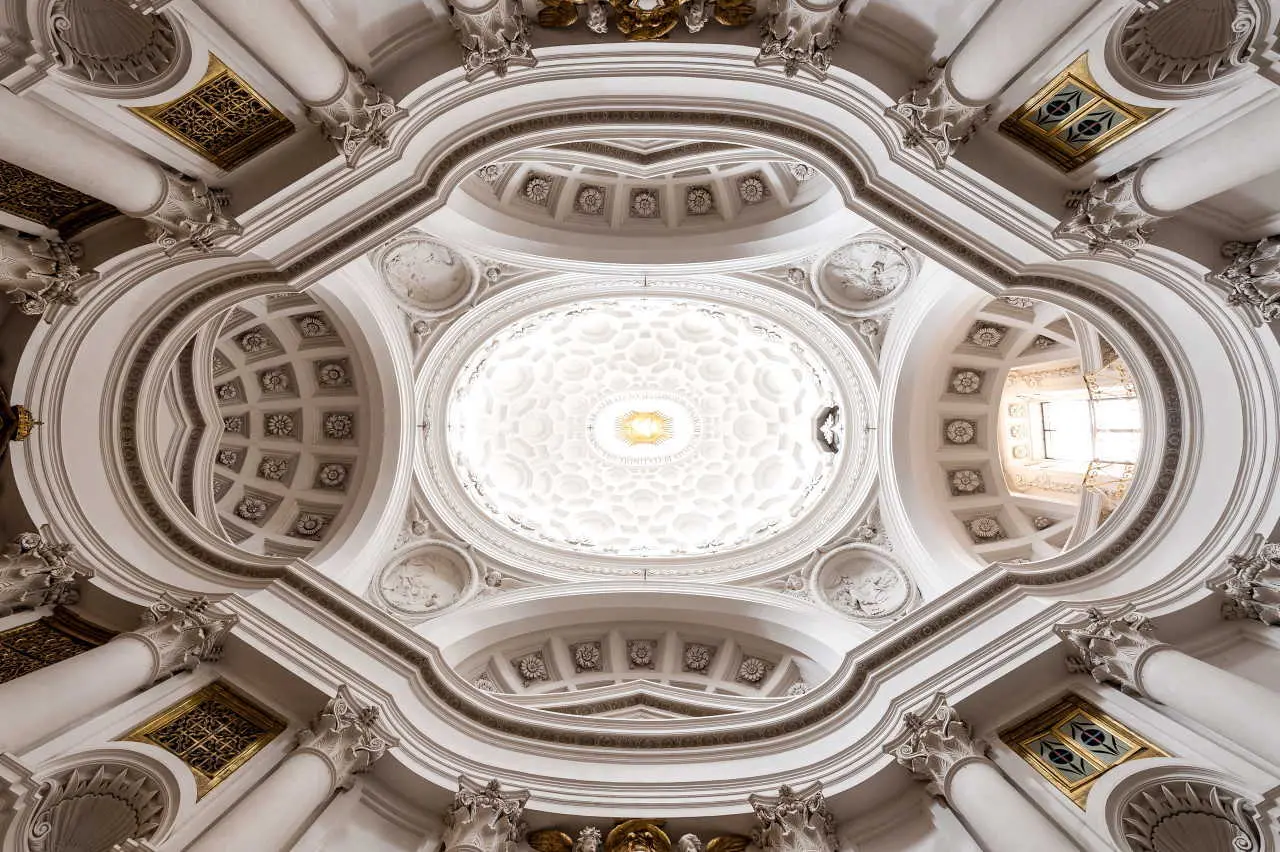
I heard his sighs of frustration as he tried to compete with the grandeur of my ancient temples. I wanted to offer some words of consolation; his San Carlino alle Quattro Fontane deserved it. But the wave function was already collapsing, teleporting me to Rome during the 19th century when the city became the capital of Italy. It was a period of great change and opportunity for the city and the country.
During these years, Rome was a city full of life and energy. The streets were bustling with people coming and going, and there was always something to do or see: a wide variety of shops, restaurants, and cafes, offering the best food and wine in Italy.
There were also challenges, such as widespread poverty among the people. Nevertheless, a strong determination among the population propelled the city and the country forward.
One of the most significant changes I witnessed was the transition from papal Rome to modern Rome. Many religious buildings were transformed into museums or monuments, while new public buildings were constructed to accommodate the institutions of the new Italian state.
Even the streets and neighborhoods underwent major changes. New neighborhoods and roads were built to connect various parts of the city, while old buildings were demolished to make way for new constructions.
Amidst all this bustling activity, there was also great attention given to the preservation of the city’s historical heritage.
I was fortunate to witness the transformation of the city from a small religious capital to a great modern metropolis.
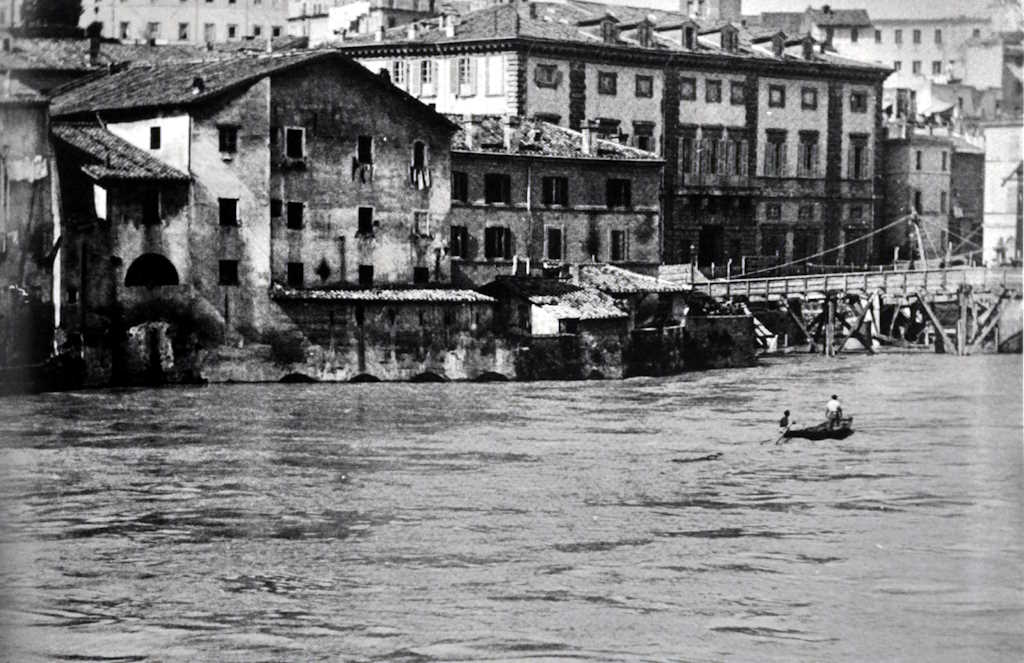
One feels quite comfortable on this cloud. I took the opportunity to take a nap. When I woke up and looked down, I noticed that it was the early 1900s.
Architecture and urban planning were in full swing, with numerous projects aimed at modernizing the city. New buildings were sprouting up everywhere, boasting modern and innovative designs.
I was somewhat skeptical of these new buildings, which seemed a bit cold and impersonal to me. I was also worried that the city was losing its unique character, replaced by modern and anonymous structures. Then I realized that the city wasn’t losing its identity; it was simply evolving. Rome had always been a city in constant evolution, and this was just one chapter in its history.
I know the rest by heart, and I believe you do too, so I’ll skip ahead to today, the modern era!
Today, looking down from above, I see contemporary Rome.
Fashionable clothing, ripped jeans, and catchphrases that I didn’t even know. “Ciao” and “like” have replaced my dear “Salve.” I’ve seen ancient traditions fade away, replaced by fast food and shopping centers.
Vesta whispered in my ear, somewhat scandalized, that even the Romans today have a touch of American slang. “Yo, what bowls, baby!” I couldn’t help but smile. Rome has truly become a multicultural city, a fusion of styles and languages.
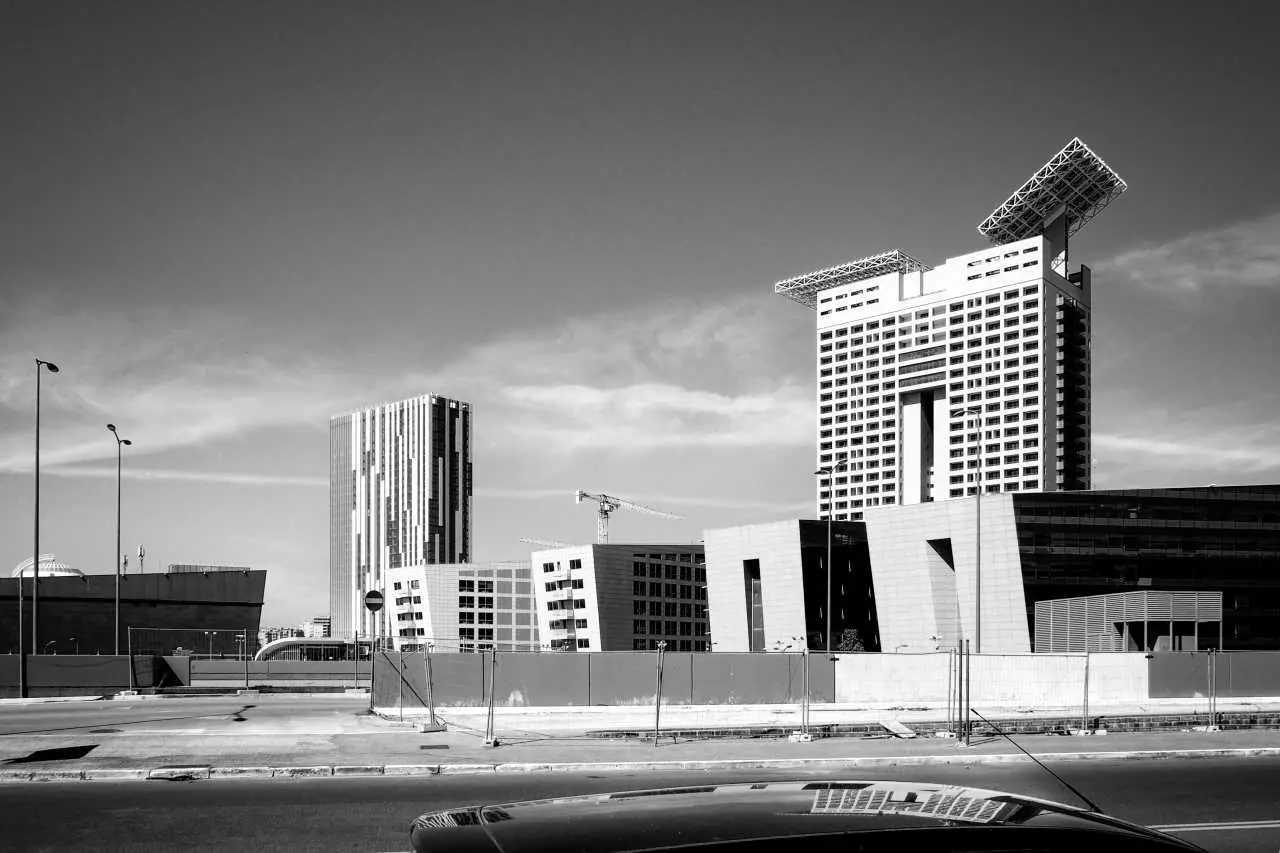
In the end, I had to admit that Rome has survived and thrived despite everything, a city that embodies history, culture, and beauty. I cannot deny its elegance, its monuments, and its indomitable spirit. Rome is a city that adapts, reinvents itself, and resists. And I, eternal Jupiter, from this cloud, observe and admire, hoping that my people can continue to walk these streets and make my Rome shine for many centuries to come.
Goodbye, Rome!
Franco Rea 2023